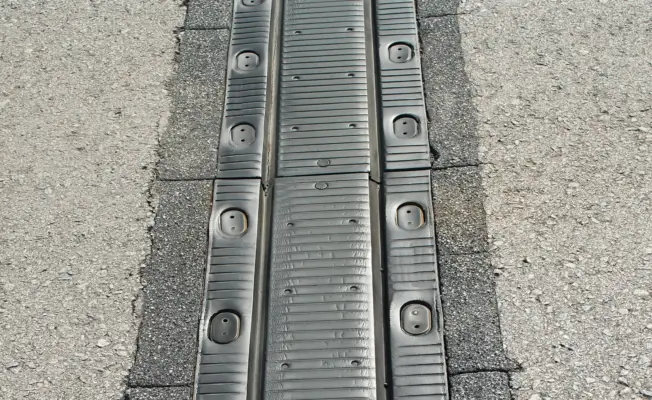
Landfill Sealants and Chemical Resistant Coatings for Safe, Durable Waste Infrastructure
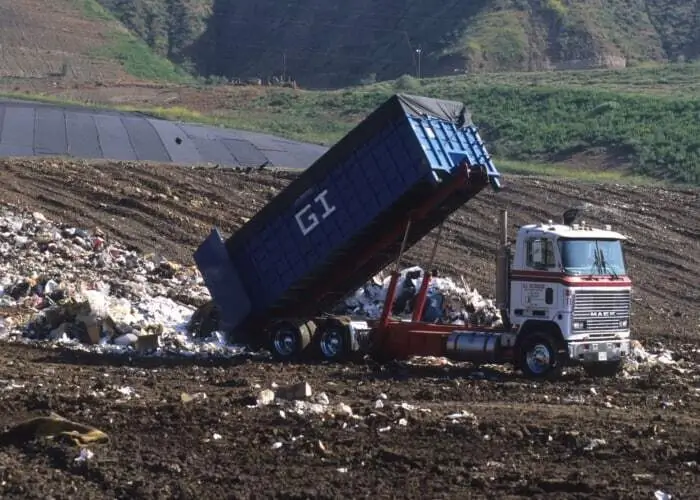
Landfill construction is not only about lining the base of a site and managing waste safely. It also involves protecting joints, concrete surfaces, collection systems and service areas that are exposed to moisture, contamination, chemical attack and constant operational use.
That is where the right sealing and protection systems make a real difference.
A well-chosen landfill sealant helps keep joints and transitions closed where reliability matters most. And in situations where concrete is directly exposed to aggressive liquids or polluted runoff, a chemical resistant coating can provide an extra layer of protection for the wider surface.
On this page, we explain where landfill sealants are typically used, when coatings should also be considered, and how to choose the right solution for landfill-related structures and waste processing environments.
Why Landfill Sealing Deserves More Attention
When people think about landfills, they usually think about liners, membranes and waste containment systems. Those are of course essential. But many practical problems do not start in the main liner. They often begin in the details around it.
Think about concrete joints in waste handling areas. Think about leachate-related service structures. Think about gas collection details, transfer zones and support slabs. These are the places where exposure, movement and wear come together. If the wrong sealing system is used, small weak points can become larger maintenance and durability issues over time.
That is why landfill sealants still matter, even in highly engineered environments. They help support the parts of a landfill that need to remain functional under real-world conditions: wet conditions, contaminated runoff, changing temperatures, movement in the structure and repeated site activity.
In some of those areas, sealing the joint alone is not enough. Where the concrete surface itself is under pressure from chemicals or dirty water, a chemical resistant coating may also be needed to protect the structure properly.
Where Landfill Sealants Are Commonly Used
Not every landfill-related application asks for the same type of protection. Some areas are mainly exposed to liquids. Others are more affected by movement or mechanical wear. That is why it helps to look at the site in practical zones.
Waste Handling and Drop-Off Areas
Waste reception and drop-off areas are often much tougher on materials than they first appear. Concrete slabs in these locations may have to deal with vehicle traffic, moisture, dirt, residue from mixed waste streams and repeated cleaning. Joints in these slabs need to stay closed and durable over time, even when they are exposed to movement and daily use.
In these cases, the sealant needs to do more than just fill a gap. It should support the joint under realistic site conditions.
Where the surrounding surface is also exposed to contaminated water or chemical residues, adding a chemical resistant coating may be a sensible next step.
Leachate Collection and Adjacent Structures
Leachate is one of the most sensitive parts of any landfill environment. Once contaminated liquid starts moving through a system of channels, collection points or service structures, the reliability of sealing becomes much more important.
In and around leachate-related areas, sealants may be needed in joints, transitions, penetrations and nearby concrete details. Here, chemical resistance and long-term wet performance are often central to the specification.
This is not the kind of environment where a standard sealant should be chosen without proper consideration.
Landfill Gas Collection Systems
Gas collection systems bring a different challenge. Here, joints and transitions may be exposed to gradual movement, weather, aging and changing service conditions over time. A sealant used in these details should be able to remain stable and flexible, even where conditions are less predictable.
It is not only about sealing at the moment of installation. It is about staying sealed after months and years of use.
Concrete Service Areas and Peripheral Structures
Around landfills and waste facilities, there are often service slabs, edge details, retaining structures and operational zones that support the wider site. These structures may not be the first thing people think of, but they still play an important role in environmental protection and durability.
If concrete in these areas is regularly exposed to moisture, contamination or harsh use, both the joints and the wider surface may need protection.
Recycling Plants and Waste Processing Facilities
Many of the same issues seen in landfill infrastructure also appear in recycling and waste processing sites. Transfer stations, sorting facilities and contaminated service areas can all have demanding joint and surface conditions.
For these applications, it may also be useful to explore sealants for waste-related concrete joints and chemical protection systems for exposed concrete.
What Really Matters When Choosing a Landfill Sealant
A landfill sealant should never be chosen on product type alone. The real question is not “Which sealant is popular?” but “What does this joint actually need to withstand?”
Chemical Exposure
Some joints are only exposed to rain and normal outdoor conditions. Others may come into contact with contaminated water, residues or chemically aggressive liquids. That difference matters. In more demanding environments, chemical resistance quickly becomes a key requirement.
Joint Movement
Landfill and waste infrastructure can shift over time. Settlement, temperature changes and structural movement can all place stress on a sealed joint. If movement is part of the reality of the application, the sealant must be able to cope with it.
Substrate Type
Concrete is common, but not every detail is concrete only. Some projects include plastics, coated surfaces, service penetrations or mixed-material transitions. Adhesion needs to match the actual substrate, not a general assumption.
Mechanical Load
In active waste handling environments, some joints are simply worked harder than others. Traffic, abrasion, maintenance and cleaning routines can all shorten the life of a poorly chosen sealant.
Long-Term Durability
What looks fine on day one may not still perform after long-term site exposure. In landfill-related environments, durability matters because repair is often inconvenient, disruptive or expensive.
Need Help Choosing the Right Landfill Sealant?
Not every landfill application requires the same approach. A joint near leachate infrastructure has very different demands than a slab joint in a service area or a transition in a gas collection detail.
Talk to us about your application and we will help you narrow down a suitable sealing solution.
Request Technical Advice
Two Common Sealant Approaches in Landfill-Related Applications
In practice, two sealant types are often considered for landfill and waste-related environments: polysulfide sealants and MS polymer sealants. Both can be useful, but they are not chosen for exactly the same reasons.
Polysulfide Sealants
Polysulfide sealants are often looked at when chemical resistance is high on the list of priorities. They can be relevant in more demanding service environments where the joint may face aggressive substances, contaminated liquids or conditions that call for a robust sealing solution.
They are often considered for:
- leachate-related details
- chemically exposed service zones
- containment-related joints
- demanding waste infrastructure applications
MS Polymer Sealants
MS polymer sealants are often appreciated for their flexibility, broad adhesion and practical versatility. They can be a good option in movement-prone joints or in applications where a more elastic sealing behavior is needed.
They are often considered for:
- movement joints in support structures
- service details with mixed substrates
- concrete joints in selected waste handling areas
- applications where flexibility is important
If chemical resistance is one of your main concerns, it may also help to compare these options with chemical resistant sealants for contaminated environments.
When a Chemical Resistant Coating Should Be Added
This is an important point, because many people focus on the joint and forget about the surface around it.
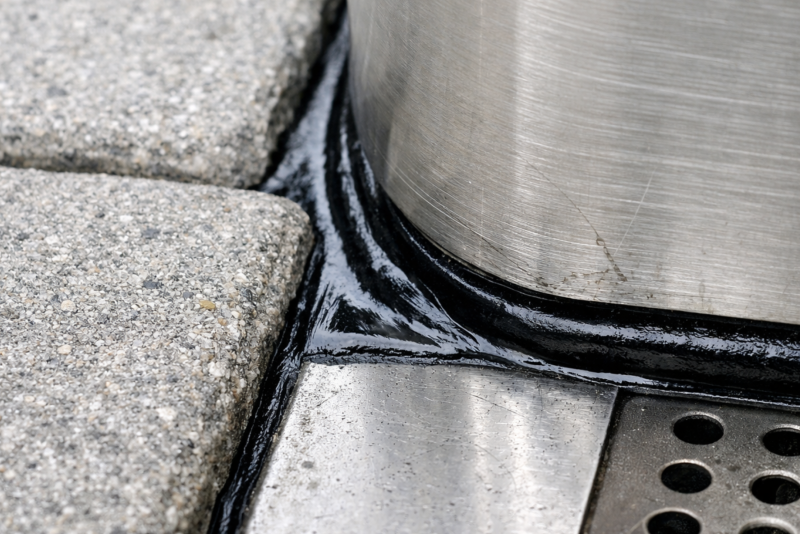
A sealant protects the joint itself. A coating protects the wider exposed surface.
If a concrete surface is regularly exposed to contaminated runoff, aggressive liquids, repeated washdown or chemical residues, sealing the joint alone may leave the surrounding structure vulnerable. In those cases, a chemical resistant coating can help protect the concrete and extend the service life of the area as a whole.
This may be relevant in:
- waste handling zones
- leachate-facing service areas
- containment pits
- collection-related concrete details
- transfer and processing environments
- concrete surfaces subject to repeated chemical exposure
In other words, sealants and coatings should not always be seen as alternatives. In many landfill-related applications, they work best together.
A More Practical Way to Choose the Right System
The best choice usually becomes clearer when you look at the detail in a practical way.
Ask:
- Is the problem mainly in the joint, or also on the wider surface?
- Is the joint exposed to chemicals, or mainly to movement and weather?
- Is the area heavily used or only occasionally accessed?
- Would failure be easy to repair, or difficult once the site is operational?
- Does the detail sit near leachate infrastructure, a gas system or a contaminated service area?
These questions often tell you more than product names ever will.
The strongest specifications usually come from stepping back, looking at the real service conditions and then choosing a system that fits the reality of the site.
Working on a Landfill, Waste Transfer or Recycling Project?
We help companies evaluate sealants and coatings for landfill-related joints, exposed concrete and chemically demanding service environments.
Whether you are comparing polysulfide and MS polymer systems or deciding when to add a coating, we can help you take the next step with more confidence.
Discuss Your Application
Landfill Protection Is Rarely a One-Product Story
One reason landfill-related specification can be difficult is that there is rarely just one technical challenge on site.
A single project may include:
- a concrete joint that needs flexibility
- a leachate-facing detail that needs chemical resistance
- a service slab that needs surface protection
- a transition that must stay reliable under movement
That is why it is often better to think in terms of protection strategy rather than a single product category.
The right answer may be:
- a sealant only
- a coating only
- or a combination of both
The better the match between system and application, the better the result tends to be over time.
Frequently Asked Questions About Landfill Sealants and Chemical Resistant Coatings
1. What are landfill sealants used for?
Landfill sealants are used in joints, transitions, penetrations and support structures where liquids, gases, contamination risk and long-term durability need to be managed.
2. Which sealant is suitable for leachate-related applications?
That depends on the actual service conditions, but in general the sealant should be selected for chemical resistance, adhesion and long-term performance in wet and contaminated environments.
3. Are polysulfide sealants suitable for landfill environments?
They can be, especially in applications where chemical resistance is one of the main requirements.
4. Can MS polymer sealants be used in landfill projects?
Yes, especially where flexibility, adhesion and movement capability are important.
5. Do all landfill joints need chemical resistant sealants?
No. The right choice depends on the exposure conditions. Some joints mainly need movement capability and durability, while others must also withstand chemical attack.
6. When should a chemical resistant coating be added?
A coating should be considered when the wider concrete surface, not just the joint, is exposed to aggressive liquids, contaminated runoff or repeated chemical stress.
7. What is the difference between a sealant and a coating?
A sealant is used to protect a joint or transition. A coating is used to protect a broader surface area.
8. Can sealants and coatings be combined?
Yes. In many landfill and waste-related applications, using both gives better overall protection than using either one alone.
9. Are these systems only relevant for landfill sites?
No. Similar solutions can also be relevant in waste transfer stations, recycling facilities and other waste processing environments.
10. How do I know which system is right for my application?
The best starting point is to look at chemical exposure, movement, substrate type, mechanical load and whether only the joint or the full surface needs protection.
Looking for a More Reliable Solution for Landfill Joints or Exposed Concrete?
From landfill sealants and chemically resistant systems to concrete protection in waste infrastructure, we help businesses identify solutions that fit the real conditions on site.
Get in touch if you would like practical advice on sealants, coatings or a combined protection approach.
Talk to a Specialist
What solution are you looking for?
We are specialized in the infrastructure and roads. Need the best products or advice? Then please leave your details and we will get in touch.