Fuel Resistant Sealant Solutions for Gas Stations, Fuel Transfer Stations and Jet Fuel Facilities
In fuel environments, sealing performance is critical
Where fuel is stored, transferred or dispensed, there is no room for compromise. Gas stations, fuel transfer stations and jet fuel or kerosene filling areas all place heavy demands on concrete surfaces and joint systems. These environments are exposed to gasoline, diesel, oils, hydrocarbons, heavy traffic and continuous operational stress.
In these conditions, a sealant must do far more than simply fill a joint. It needs to help protect the concrete, resist aggressive fuel exposure, support long-term durability and contribute to a safer and more reliable operating environment.
That is where the right fuel-resistant sealing solution makes a real difference.
Need a certified fuel-resistant sealing solution for your project?
Talk to our specialists about gas stations, fuel transfer stations, kerosene areas and other fuel-handling applications. We support projects worldwide from first assessment to application guidance.
Contact our specialists
Fuel-resistant sealants for demanding applications
Fuel-related infrastructure is tough on materials. Spills, traffic loads, weather exposure, cleaning routines and daily wear all come together in one environment. Over time, these conditions can place serious stress on joints, edges and vulnerable transitions in concrete surfaces.
A properly selected fuel-resistant sealant helps to support:
- resistance to gasoline, diesel, kerosene and oils
- protection of concrete joints and adjacent structures
- long-term performance under mechanical stress
- reduced risk of leakage into surrounding areas
- greater durability in heavily used fuel environments
- a more reliable maintenance strategy
These requirements apply not only to traditional gas stations, but also to fuel depots, fuel transfer facilities, loading zones and aviation-related fuel areas.
Applications we support worldwide
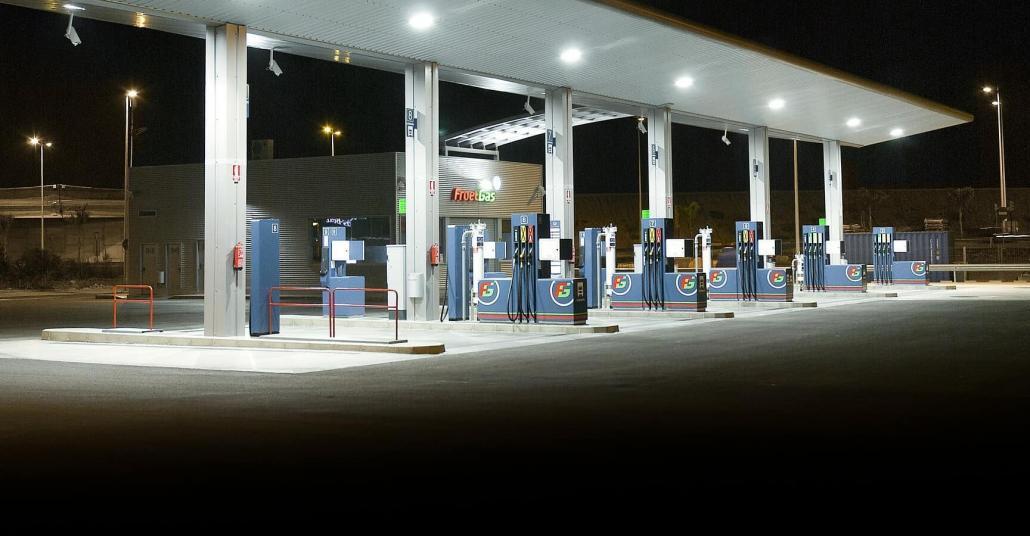
Gas stations and fuel station forecourts
At gas stations, the forecourt is one of the most demanding parts of the site. Concrete joints are exposed to fuel spills, oil contamination, turning vehicles, braking forces, rainwater and temperature changes. In these areas, the sealing system needs to remain reliable under continuous exposure and repeated use.
Typical applications include:
- concrete expansion joints
- forecourt joints
- pump island details
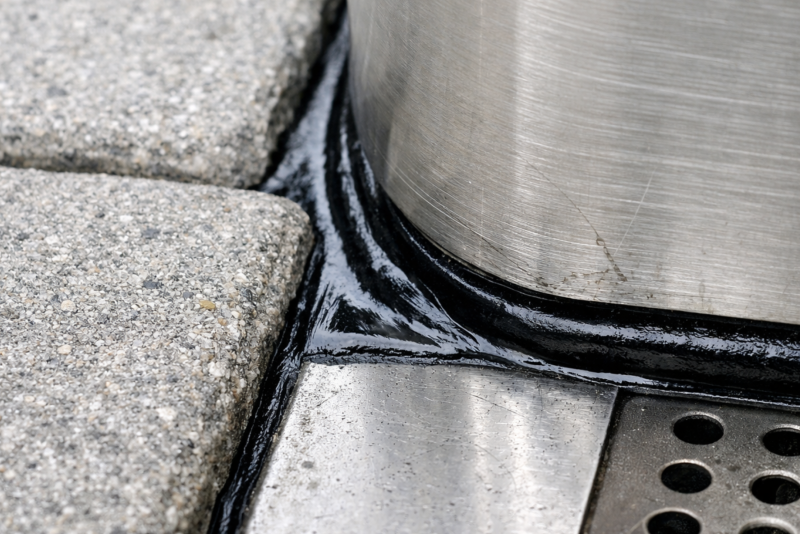
- transitions around drains and service areas
- refurbishment of damaged joints
- sealing in new-build and renovation projects
Fuel transfer stations
Fuel transfer stations often involve more intensive operating conditions than standard retail fuel stations. Repeated loading and unloading activities, heavier traffic and greater exposure to aggressive substances can all increase the demands on the sealing system.
In these environments, performance is not determined by one single property. The right solution depends on the combination of chemical resistance, movement capability, mechanical strength and long-term suitability for the site.
Jet fuel and kerosene filling areas
In aviation and kerosene-related environments, reliability becomes even more important. These projects often require a high level of technical assessment, careful product selection and confidence in long-term performance.
For these areas, fuel resistance alone is not enough. The sealant also needs to perform under real operating conditions, including traffic loads, exposure cycles and demanding service requirements.
Choosing the right fuel-resistant sealant
There is no universal sealant that suits every fuel-handling project. The right choice depends on the location, the type of fuel, the structure of the joint, the traffic load and the expectations for maintenance and service life.
Important points to consider include:
Chemical exposure
Not every site is exposed to the same substances in the same way. A solution should always be matched to the actual fuel environment, whether that involves gasoline, diesel, kerosene or a broader hydrocarbon exposure profile.
Joint design and concrete condition
The substrate and joint construction play a major role in the long-term success of the sealing system. New construction, ageing concrete and repair situations often require different technical approaches.
Mechanical load
Areas exposed to cars, trucks, tankers or service vehicles require a sealant that can handle repeated mechanical stress without losing performance too quickly.
Abrasion and wear
In many fuel environments, traffic and maintenance routines create ongoing surface wear. Abrasion resistance is therefore an important part of overall durability.
Downtime and maintenance
Some clients prefer the longest possible service life. Others prioritise speed of installation and rapid return to service. The most suitable system depends on what matters most for the operation of the site.
Certification and qualification requirements
In many projects, especially larger or internationally coordinated ones, it is essential to work with solutions that meet the required certifications, qualifications and project standards.
Looking for the right sealant for a demanding fuel environment?
We help you select a suitable solution based on fuel exposure, joint design, traffic load, certification requirements and project conditions.
Request technical advice
More than supply: support from first enquiry to application
Our role in these projects goes far beyond simply offering a sealant. We support the complete process, from the first technical discussion through to application support in the field.
That means we can assist with:
- initial project assessment
- technical consultation
- selection of the right sealing solution
- quotation support
- specification input
- laboratory-backed evaluation
- application guidance
- on-site appointments where needed
This end-to-end support helps clients make informed choices and gives project teams more confidence from the earliest stages onward.
Strongly positioned in fuel-resistant sealing solutions
We are strongly positioned in this market and support major projects involving fuel-resistant sealing solutions. Our work includes applications for gas stations, fuel transfer stations and areas exposed to aviation fuels such as kerosene.
Because these are critical applications, clients need more than a product. They need a dependable partner who understands the technical demands, the operational realities and the importance of getting it right.
That is exactly the role we aim to fulfil.
Certified solutions for critical environments
In fuel-handling infrastructure, performance needs to be supported by the right qualifications. We offer certified solutions and meet the required qualifications for demanding applications in this field.
This matters for projects where reliability, technical assurance and compliance are key considerations. It also matters for clients who need a partner that can support both the technical and practical side of a project with confidence.
References are available after consultation.
In-house laboratory support
One of our distinguishing strengths is our own laboratory. This gives us the ability to support projects with a stronger technical foundation and to look beyond standard product positioning alone.
Our laboratory support helps us assess technical suitability more carefully and contribute to better-informed recommendations, especially in complex or high-demand environments.
For clients, that means an additional level of confidence when selecting a sealing system for critical fuel exposure conditions.
Global reach, market-specific expertise
Fuel infrastructure projects are not identical from one market to another. Requirements, working methods, climate influences and project expectations can vary considerably depending on the country, operator and application.
That is why we combine worldwide project support with market-specific expertise. We work with people who understand the specific demands of each market, allowing us to offer advice that is both technically sound and practically relevant.
This combination of international capability and market-focused knowledge is one of the reasons clients trust us with demanding projects.
A reliable partner for critical projects
In this industry, reliability is not just a promise. It is something clients expect to see in communication, preparation, technical guidance and follow-up.
We are known as a dependable partner with:
- strong expertise in fuel-resistant sealing applications
- practical and technical market knowledge
- a reliable approach to support and coordination
- the ability to guide projects from quotation to application
- people with unique knowledge and experience in specific markets
For critical environments such as gas stations, transfer stations and jet fuel areas, that reliability has real value.
Suitable for new construction, refurbishment and repair
Fuel-resistant sealing is relevant at every stage of a project.
New construction
At the design and specification stage, selecting the right system early can help avoid unnecessary risks later on.
Refurbishment
Existing sites often require an approach that takes both the operational demands and the condition of the substrate into account.
Repair
Repair work in active fuel environments requires careful judgement. The right solution has to balance technical performance, practicality and downtime.
When to involve a specialist
The best results are usually achieved when a specialist is involved early in the project. That is especially true when:
- fuel exposure is a defining part of the environment
- concrete joints are located in critical operational areas
- certification or qualification requirements apply
- heavy traffic loads are expected
- the project team wants support from specification through execution
- fast but reliable technical decisions are needed
Early involvement can help prevent the wrong product choice and create a smoother path from design to application.
Looking for a dependable fuel-resistant sealing solution?
If you are working on a gas station, fuel transfer station, kerosene area or another fuel-handling project, we can help you identify a sealing solution that fits the demands of the application.
We support projects worldwide with certified systems, technical expertise, laboratory-backed input and practical guidance from first quotation to application support.
And when needed, we are available for on-site consultation as well.
Frequently Asked Questions
1. What is a fuel-resistant sealant?
A fuel-resistant sealant is a sealing material designed for environments where exposure to gasoline, diesel, kerosene, oils or hydrocarbons is expected. It is often used in concrete joints at gas stations, transfer stations and aviation fuel areas.
2. Where are fuel-resistant sealants typically used?
They are commonly used in gas stations, fuel transfer stations, forecourts, loading areas, depots and jet fuel or kerosene filling locations.
3. Why is a standard construction sealant not suitable for fuel-exposed areas?
Standard construction sealants are often not designed to handle continuous or repeated exposure to fuels and hydrocarbons. In demanding fuel environments, a specialised sealant is needed to maintain performance and durability.
4. Which fuels should the sealant be resistant to?
That depends on the application. In many projects, resistance to gasoline, diesel, oils, kerosene or a broader hydrocarbon exposure profile is required. The correct solution should always be matched to the actual site conditions.
5. Can fuel-resistant sealants be used for both new construction and refurbishment?
Yes. Fuel-resistant sealants can be used in new-build projects, refurbishment works and repair situations, provided the right system is selected for the substrate, joint design and operational demands.
6. Are fuel-resistant sealants suitable for heavy traffic areas?
Yes. Many fuel-resistant sealing solutions are designed for demanding environments where surfaces are exposed to cars, trucks, tankers and service vehicles. Mechanical load and abrasion resistance are important selection criteria.
7. Why are certification and qualifications important in these projects?
In critical environments such as gas stations and aviation fuel areas, certification and qualifications help provide confidence that the selected solution is suitable for demanding service conditions and project requirements.
8. Do you support projects outside your home market?
Yes. We support projects worldwide and combine international project capability with market-specific expertise to help clients select the right sealing approach for their local application.
9. Do you only supply products, or do you also provide technical support?
We support more than supply alone. We can assist with technical consultation, quotation support, laboratory-backed input, project assessment, on-site appointments and application guidance.
10. Are references available for similar projects?
Yes. References are available after consultation.
What solution are you looking for?
We are specialized in the infrastructure and roads. Need the best products or advice? Then please leave your details and we will get in touch.